
PCA Education Hours in California
All courses are approved by the Tennessee Department of Agriculture as “External” training.
Commercial Pesticide Applicators have a 3-year renewal period. All Continuing Education Credits (CEU’s) are due by June 30th.
Private Pesticide Applicators have a 3-year renewal period. All Continuing Education Credits (CEU’s) are due by June 30th.
*PLEASE NOTE: CEU’s can be taken 100% in online courses, but you cannot take more than 75% of the required credits within a single course. Continuing Education Credits cannot all be earned within a single year.*
Please clink on the links below to view our available courses.
What Each Pesticide Category Means
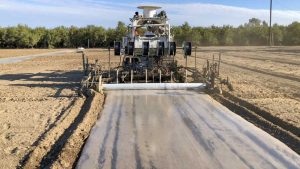
drip tape and tarp installation for soil fumgation study in almonds
Understanding pesticide categories is one of the biggest hurdles for applicators, especially those juggling pest control licensing requirements across multiple states. While this page focuses on Tennessee courses, many professionals also hold credentials in California (CA), where PCA credits and PCA education hours are mandatory for agricultural work.
Each pesticide category represents a specific area of practice. Instead of listing only codes, here’s what these categories actually mean in day‑to‑day work:
- Agricultural plant — For applicators treating crops, orchards, vineyards and large‑scale food production.
- Structural pest control — Covers termites, ants, roaches, rodents and other pests inside or around buildings.
- WDO (wood‑destroying organisms) — Focuses on termites, carpenter ants and beetles that damage structural wood.
- Ornamental and turf — For landscapers, groundskeepers and golf‑course managers applying herbicides or fungicides.
- Public health — Mosquito control, vector management and applications protecting community health.
- Fumigation — Highly specialized work requiring advanced safety training and regulatory compliance.
By breaking categories down into real‑world tasks, Pested makes it easier for agriculturalists, farmers and pest‑management professionals to choose the correct course without guesswork.
Step‑by‑Step Tennessee License Renewal Guide
Renewing your Tennessee pesticide license doesn’t have to be confusing. Here’s a simple, conversational walkthrough for busy applicators who want clarity quickly:
- Check your renewal cycle Tennessee licenses renew every two years. Mark your calendar early to avoid last‑minute stress.
- Confirm your required CEUs Each category has specific hour requirements. If you also work in California, remember that PCA education hours and PCA credits follow different rules.
- Choose approved online courses Select courses that match your category. Online training through Pested is state‑approved and available 24/7.
- Complete your CEUs before the deadline Don’t wait until the final week — technical issues or missing hours can delay renewal.
- Submit your renewal to the state After completing your courses, upload certificates and pay renewal fees through the Tennessee Department of Agriculture portal.
- Keep records for future audits Save certificates digitally. Many applicators maintain a folder for both Tennessee and CA credentials.
Ready to complete your CEUs with a trusted instructor who has trained thousands across North America? Start your courses today with Pested and keep your credentials current without the hassle.
FAQ
How do I know which category I need?
Match your daily work tasks to the category descriptions above for quick clarity.
Can I take courses online?
Yes. All Tennessee courses offered by Pested are state‑approved for online completion.
Do online CEUs count the same as in‑person?
Absolutely. Online CEUs meet Tennessee’s renewal requirements.
What if I’m licensed in multiple states?
Keep separate folders for certificates. Requirements differ between Tennessee and CA.
How long does renewal take?
Most renewals are processed quickly once CEUs are complete and fees are submitted.
-

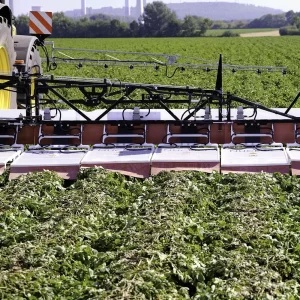
Agricultural Plant (Category C01)
-
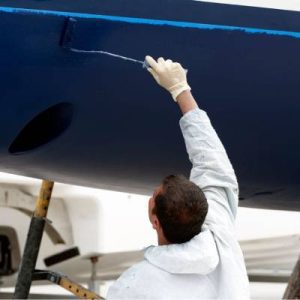
Antifouling Marine Paint (Category C13)
-
Aquatic Pest Control (Category C05)
-
Demonstration & Research (Category C10)
-
Forest Pest Control (Category C02)
-
Limited Herbicide Applicator (Category C09)
-
Microbial Pest Control (Category C14)
-
Ornamental & Turf (Category C03)
-
Pesticide Dealer (Category C12)
-
Public Health (Category C08)
-
Right of Way (Category C06)
-
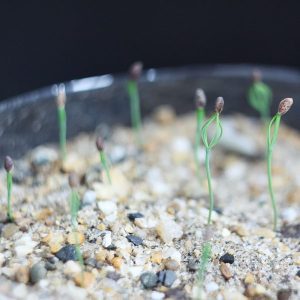
Seed Treatment (Category C04)
-
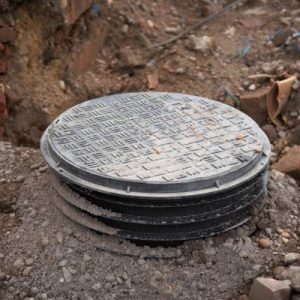
Sewer Line Treatment
-
Structural Pest Control (Category C07)
-
Wood Preservatives (Category C11)